LatestBest Practices for Identifying and Securing Non-Human Identities
Resource / Online Journal
Identity Intelligence: How AI Turns Access Data into Leadership Insights
Identity Intelligence transforms access data into a continuous measure of trust, giving leadership the clarity to protect and shape the enterprise.
Published on Feb 13, 2026
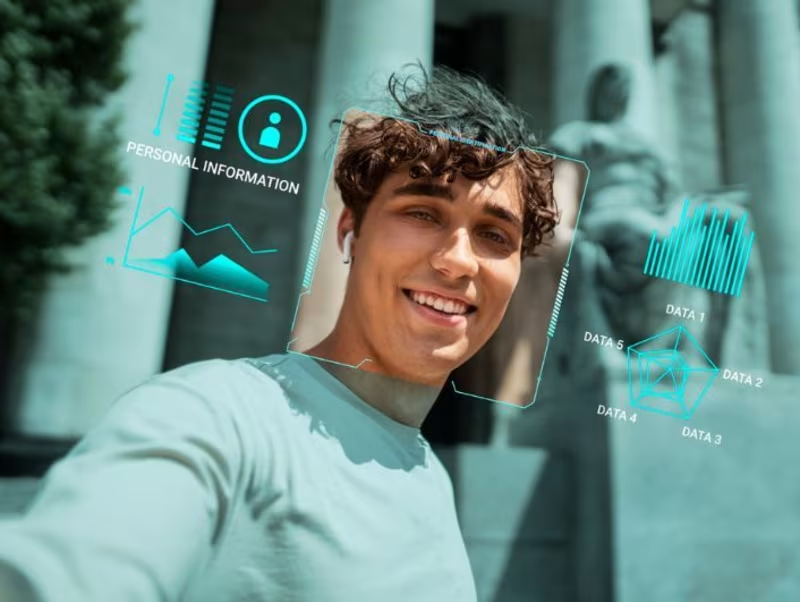
For years, identity and access management have been treated as digital infrastructure, essential but largely invisible. As long as users could log in and breaches were avoided, identity systems were considered successful.
That mindset is quietly changing. Today, identity systems generate some of the richest data an organization owns.
Every login, access request, privilege escalation, and behavioral anomaly tells a story about how work actually happens. With AI now capable of analyzing this data at scale, identity has evolved from a control mechanism into an intelligence layer, one that offers leaders a clearer view of risk, resilience, and organizational behavior.
From Access Control to Intelligence Signal
Access data was never meant to sit idle. Yet for years, it was locked away in logs, reviewed only after incidents or audits. AI has changed that equation.
Modern identity platforms analyze access patterns continuously, correlating behavior across users, roles, devices, and applications. What emerges is not just a security signal, but an operational one. Leaders can now see how permissions align with roles, where access has drifted over time, and how identity-related friction impacts productivity.
Identity intelligence shifts the conversation from “Who has access?” to “What does access tell us about how the business actually runs?”
What Identity Data Reveals to Leadership
When interpreted correctly, identity data becomes a mirror of the organization. It reveals where processes are overly complex, where roles are poorly defined, and where risk accumulates quietly. Excessive privilege often points to unclear ownership. Frequent access exceptions can signal operational bottlenecks. Unusual behavior may indicate not just threat, but burnout, urgency, or misalignment between policy and reality.
AI enables leaders to see these patterns without drowning in detail. The value is not in the data itself, but in the insight it produces.
Moving Beyond Security-Centric Thinking
One of the biggest shifts leaders must make is recognizing that identity intelligence is not only a security function.
Yes, it strengthens threat detection and reduces risk. But it also informs decisions around workforce design, application rationalization, compliance readiness, and even digital transformation. Identity data shows where trust is concentrated, where it is overextended, and where it is repeatedly questioned.
When leaders view identity solely through a defensive lens, they miss its strategic potential.
AI as the Interpreter, Not the Decision-Maker
AI excels at pattern recognition, but leadership insight requires interpretation. Identity intelligence works best when AI surfaces trends and humans provide context.
Anomalous access does not always equal malicious intent. High-risk behavior may reflect urgent business needs. Effective leaders use AI-driven insights as prompts for better questions, not as final answers.
This balance ensures identity intelligence remains a tool for understanding, not just enforcement.
Governance Turns Insight into Trust
As identity data becomes more powerful, governance becomes more critical. Who has access to these insights? How are they used? How do we ensure they don’t drift into surveillance?
Leadership must set clear boundaries. Identity intelligence should enhance trust, not erode it. Transparency, proportionality, and accountability are essential if organizations want people to embrace AI-driven insights rather than resist them.
Trust is not just protected by identity systems; it is shaped by how their intelligence is applied.
Why Identity Intelligence Belongs in the Boardroom
The organizations that lead in the AI era will be those that understand identity as a strategic signal, not just a technical one.
Identity intelligence helps leaders:
- Anticipate risk before incidents occur
- Understand how digital trust flows through the organization
- Align access with actual business needs
- Measure the health of governance in real time
- These are leadership questions, not operational ones.
A New Role for Identity in Leadership
Identity is no longer just about who gets in. It is about what access tells us, what behavior reveals, and how trust is earned and adjusted continuously.
AI has given identity a voice. The responsibility of leadership is to listen - thoughtfully, ethically, and strategically. Those who do will find that identity intelligence doesn’t just secure the enterprise. It helps leaders understand it.
Recommended articles


2026 Cybersecurity Trends: How Identity Security Solutions Are Evolving Globally
Take Your Identity Strategy
to the Next Level
Strengthen your organization's digital identity for a secure and worry-free tomorrow. Kickstart the journey with a complimentary consultation to explore personalized solutions.