LatestBest Practices for Identifying and Securing Non-Human Identities
Resource / Online Journal
Effective Data Governance: Best Practices and Tools
Explore modern data governance practices for 2026, including AI-powered tools, data security principles, and best practices to ensure compliance, integrity, and resilience against evolving threats.
Published on Dec 29, 2025
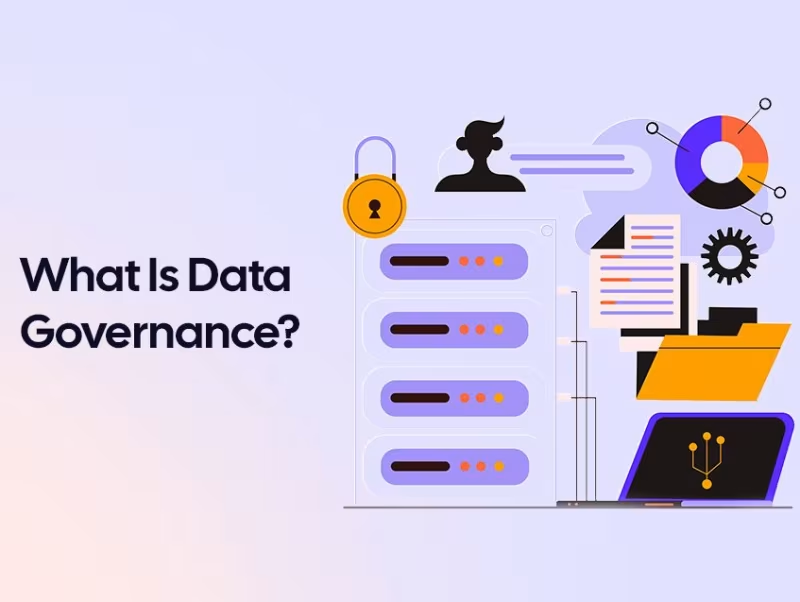
Data Governance in the Modern Enterprise
Data governance refers to a structured set of policies, standards, and operational practices designed to maintain data accuracy, reliability, and security throughout its entire lifecycle. A well-orchestrated governance framework ensures that data assets remain accessible, consistent, and protected, enabling organizations to derive maximum value while meeting stringent regulatory obligations.
An effective data governance program assigns clear data ownership and designates data stewards to supervise critical datasets. These roles are pivotal in eliminating data silos, mitigating poor data quality, and enforcing data integrity across diverse business processes. By embedding governance principles into data management practices, enterprises can safeguard sensitive information and enhance decision-making accuracy.
The Evolution of Data Governance in 2025
Modern governance strategies have embraced artificial intelligence and automation to streamline data discovery, metadata management, and data lineage tracking. Enterprise reports highlight how AI-driven tools accelerate data classification, improve data quality rules, and strengthen compliance frameworks, making governance more adaptive and resilient in the face of emerging threats.
The 2025 MOVEit supply chain attack, which compromised millions of records containing sensitive data, and the Change Healthcare ransomware assault, which disrupted critical financial data flows, serve as stark reminders of the vulnerabilities lurking in modern ecosystems. These incidents highlight the pressing need for proactive governance strategies to counter evolving threats anticipated in 2026.
Building an Effective Data Governance Program
A data governance program begins with a well-defined data governance framework that establishes clear roles and responsibilities. Central to this structure are the data governance council and the data governance team, which oversee governance initiatives, enforce data policies, and ensure alignment with organizational objectives.
Data Management
Data management encompasses a comprehensive set of practices that ensure data accuracy, consistency, and security across the data lifecycle. These practices include data collection from diverse internal and external data sources, metadata management for contextual clarity, and data lifecycle management to maintain integrity from creation to archival.
Modern data governance tools, such as data catalogs, automate critical functions like:
- Data lineage tracking for transparency in data flows.
- Enforcing data quality rules to prevent poor data quality.
- Streamlining data classification and access controls for sensitive data.
Aligning Data Management with Governance Strategy
A robust data governance strategy aligns data management processes with organizational objectives, enabling:
- Seamless data usage across departments.
- Compliance with regulatory requirements.
- Enhanced data integrity and data security for critical data assets.
As enterprises adopt cloud data lakes and AI-driven solutions, modern data management practices must evolve to support data discovery, data architecture optimization, and metadata-driven automation.
Data Security
Data security is the cornerstone of modern governance, encompassing data protection, data privacy, and adherence to regulatory requirements such as the latest GDPR updates in 2025. As organizations migrate to cloud data lakes and adopt AI-driven architectures, securing critical data assets has become more complex and mission-critical.
Governance Principles Driving Security
Data governance principles enforce:
- Access controls to restrict unauthorized entry.
- Data encryption for safeguarding sensitive data during storage and transmission.
- Data classification and metadata management to ensure visibility and compliance across the data lifecycle.
Best Practices for Resilient Data Security
To strengthen defenses, organizations should:
- Implement data governance tools for data discovery, data cataloging, and policy enforcement.
- Regularly update data security measures such as multi-factor authentication, encryption standards, and access control lists.
- Align data governance strategy with regulatory compliance and business processes to maintain data integrity and trustworthy data.
By integrating data security best practices into a modern data governance program, enterprises can reduce exposure to data breaches, protect financial data, and ensure high-quality data for analytics and operations.
2026 Data Governance Solutions
Data Governance Solutions: Tools and Best Practices for 2026
Modern data governance solutions empower organizations to manage data assets effectively, ensuring data integrity, accuracy, and compliance across complex ecosystems. These solutions typically include enterprise data governance tools designed for master data management, data architecture optimization, and metadata-driven automation.
Core Capabilities of Governance Tools
Leading platforms provide:
- Data catalogs for data discovery, classification, and metadata management.
- Data lineage monitoring to track data flows and maintain transparency.
- Data quality rules enforcement to prevent poor data quality.
- Integration with cloud data lakes and data lifecycle management systems.
Best Practices for Implementing Data Governance Solutions
To maximize the effectiveness of governance initiatives, organizations should:
- Define a Clear Governance Framework: Establish roles such as data owners, data stewards, and a data governance council to oversee governance processes and enforce accountability.
- Implement Enterprise Governance Tools: Use data catalogs, data lineage tools, and master data management systems to unify data sets, eliminate data silos, and maintain data integrity.
- Enforce Data Classification and Access Controls: Categorize sensitive data and apply role-based access controls to safeguard critical data assets.
- Apply Data Quality Rules and Standards: Define and monitor data quality metrics to ensure high-quality data for analytics and decision-making.
- Integrate Metadata Management and Automation: Leverage metadata-driven automation for data discovery, policy enforcement, and regulatory compliance.
- Align Governance with Business Processes and Compliance: Ensure governance policies support business objectives and meet regulatory requirements such as GDPR and industry-specific mandates.
- Monitor Data Lineage and Lifecycle: Track data flows across systems to maintain transparency and mitigate risks associated with data breaches or third-party vulnerabilities.
- Foster Continuous Improvement and Training: Educate data users and data consumers on governance principles and update policies regularly to adapt to evolving threats.
Conclusion
Effective data governance is essential for ensuring data quality, security, and trust across the enterprise. By implementing robust governance frameworks, supported by metadata management, data lineage, and access controls, organizations can effectively eliminate data silos and confidently utilize data for business and analytics purposes.
Cybersecurity service provider TechDemocracy helps organizations operationalize data governance by aligning governance strategies with business processes, regulatory requirements, and security priorities. With the right framework and tools in place, enterprises can turn their data estate from a risk into a strategic asset.
Recommended articles


Identity Governance Implementation for Trading Company
Take Your Identity Strategy
to the Next Level
Strengthen your organization's digital identity for a secure and worry-free tomorrow. Kickstart the journey with a complimentary consultation to explore personalized solutions.